
10 WhatsApp Marketing Software Solutions for Audience Segmentation
You picked a WhatsApp tool, set up broadcasts, and still watch open rates crawl while some segments go silent. Generic blasts are the reason, and your audience list is too mixed for one message to work.
This article breaks down 10 WhatsApp marketing software solutions for audience segmentation, starting with what to look for and ending with a clear #1 pick. You will know which platform fits your team size, budget, and automation needs by the final section.
What to Look For in WhatsApp Marketing Software for Audience Segmentation
Choosing the right WhatsApp marketing software for audience segmentation hinges on a few non-negotiable features that directly impact your campaign's success. The best tools make it easy to slice your contacts into meaningful groups without requiring a data science degree. Look for platforms that balance power with simplicity, so your team can actually use them daily.
Start with advanced segmentation rules. The software should let you filter audiences by demographics, user behavior, geolocation, and purchase history. This goes far beyond simple name lists, allowing you to target the right message to the right person at the right moment.
Custom fields and tags are the backbone of flexible contact management. These let you build granular audience segments that reflect your unique business model. Whether you track subscription tiers, lead scores, or product preferences, custom fields keep your data organized and actionable. You can also explore How to Choose Promotional Products for an Event: A Beginner’s Guide for a closer comparison.
CRM integration is essential for a unified view of your customer journey. The software should sync seamlessly with your existing customer relationship management tools and third-party tools. This ensures your WhatsApp Marketing efforts align with your broader sales and support strategies, eliminating data silos.
Look for support for dynamic content and personalization. This feature automatically inserts names, locations, or recent purchases into your messages. Personalized broadcasts consistently outperform generic blasts in engagement rate and click-through rate.
Automation capabilities separate basic apps from true Software Solutions. You need chatbot automation for instant responses and drip campaigns that nurture leads over time. These tools keep your audience engaged even when your team is offline, which is critical for conversion tracking and building a consistent customer journey.
Opt-in compliance is non-negotiable in this space. The platform must enforce proper consent management to protect your sender reputation. Adhering to opt-in rules is not just legal best practice, it also boosts your deliverability and keeps your messages out of spam folders.
Finally, demand a robust analytics dashboard. You need clear metrics on engagement rate, click-through rate, and conversion tracking to refine your segmentation rules. A good dashboard shows you which audience segments respond best, so you can double down on what works and adjust what does not.
Scalability matters more than you might think. Your audience segmentation needs will grow as your contact lists expand. Choose a platform that handles growing data volumes without slowing down or complicating your workflow.
Ease of use is the final gatekeeper. The most powerful segmentation engine is useless if your team cannot navigate it. Prioritize tools with intuitive interfaces that let you build broadcast lists and schedule campaigns in just a few clicks.
1. Com.bot - Best Overall
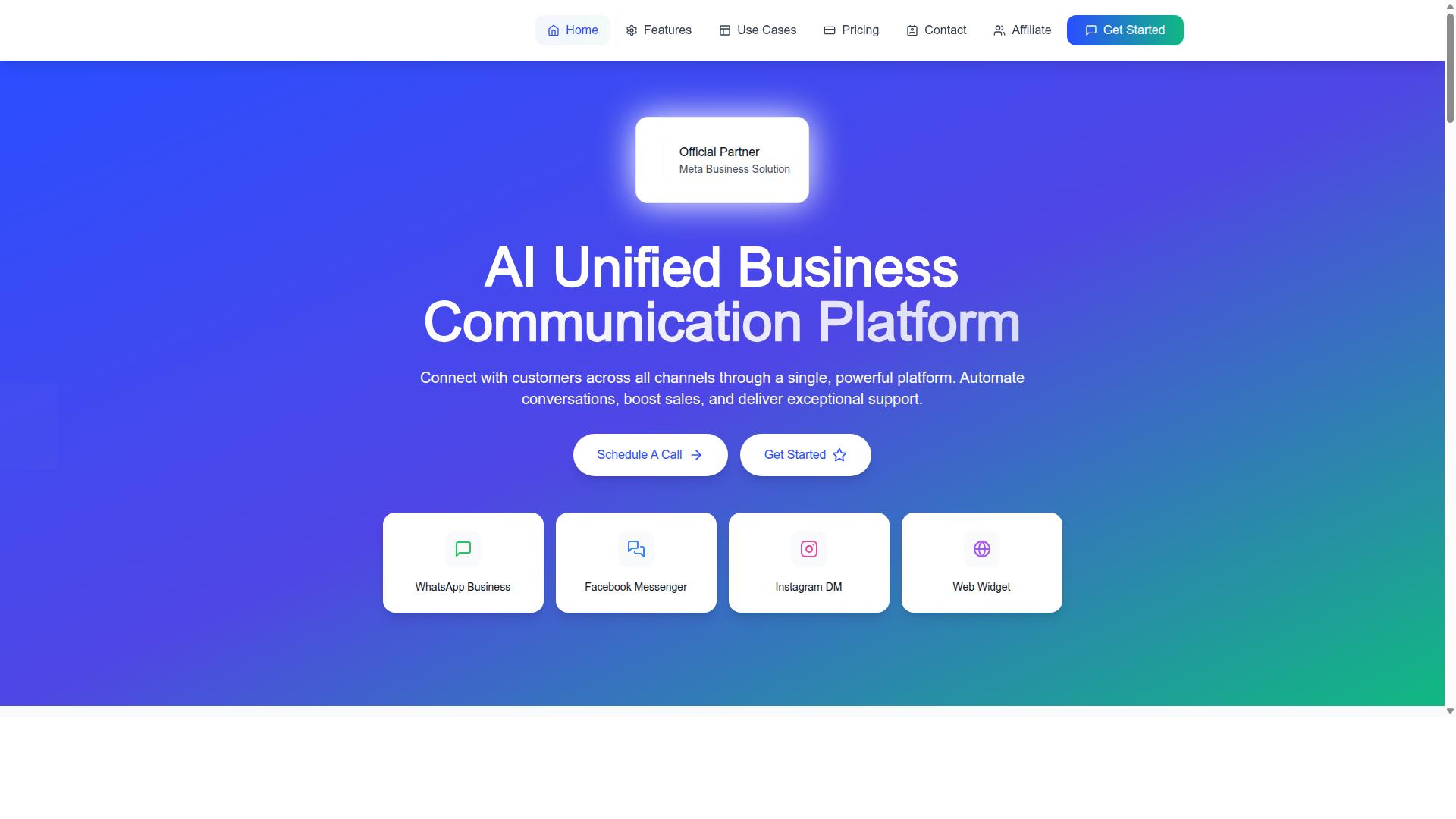
Com.bot stands out as the best overall WhatsApp marketing software for audience segmentation, thanks to its unified platform and powerful automation tools. It centralizes customer data across WhatsApp, Facebook, and Instagram, which means you can build richer audience profiles from every conversation channel. This multi-channel support makes segmentation more accurate because you see the full customer journey, not just one platform.
Its Visual Bot Builder uses a drag-and-drop interface, so you can create tailored conversational flows based on user behavior without writing a line of code. You can route different customer segments into distinct bot paths that respond to their specific questions or actions. This is the kind of chatbot automation that turns raw interactions into meaningful engagement.
For outreach, Com.bot handles bulk messaging and drip campaigns directly through the WhatsApp Business API. You can schedule messages that land at the right moment in the customer journey, whether that is an order update, a payment reminder, or a follow-up notification. The Automation Builder connects to 1000+ integrations, so your segmentation rules can pull data from your existing CRM, e-commerce, or help desk tools.
What truly separates Com.bot is its analytics dashboard, which helps you refine segments over time. You can review engagement patterns and adjust your segmentation rules, tags, and custom fields accordingly. The platform also includes a Unified Team Inbox and team collaboration with role-based access, so your whole team works from the same customer data.
Key features that support audience segmentation include:
- WhatsApp Business API integration
- Multi-Channel Support for WhatsApp, Facebook & Instagram
- Visual Bot Builder with drag-and-drop interface
- Automation Builder with 1000+ integrations
- Bulk Messaging and drip campaign tools
- Native Payments for WhatsApp transactions
- Order Updates and smart notifications
- Customer Support and smart chatbots
Com.bot also extends into adjacent platforms like Tasks.Bot for enterprise task automation, Tickets.Bot for event ticketing, and Calendars.Bot for AI appointment booking. These tools share the same segmentation logic, so your WhatsApp marketing stays consistent across your entire operation. For teams that need deep personalization based on user behavior, demographics, and purchase history, Com.bot delivers the most complete package.
2. Wati
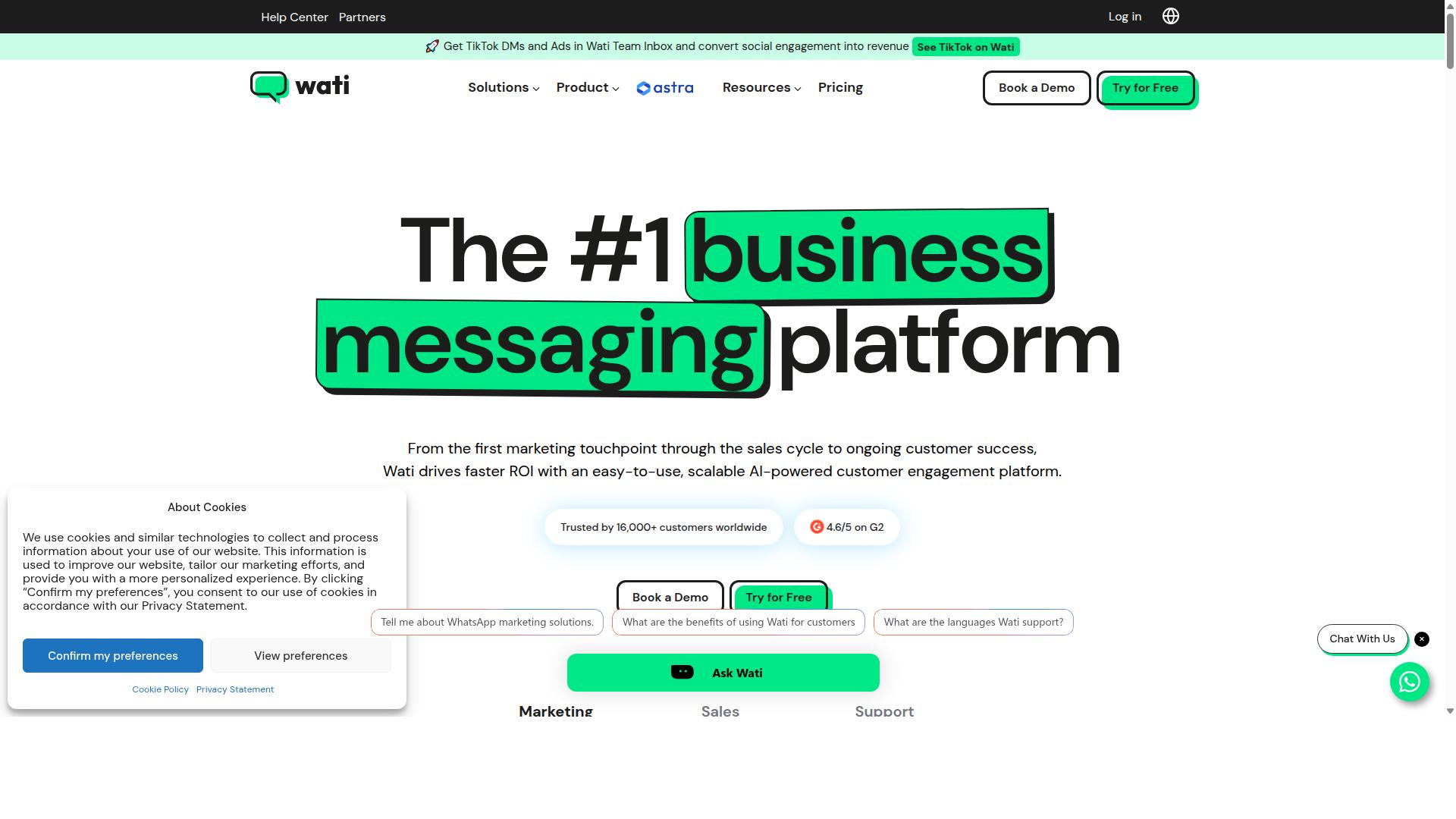
Wati is a solid choice for businesses that need straightforward WhatsApp marketing with reliable segmentation features. It focuses on making the WhatsApp Business API accessible to small and medium businesses that want to move beyond the basic app.
The platform is known for its easy-to-use interface, which reduces the learning curve for teams that are new to WhatsApp automation. Broadcast lists let you send bulk messaging to your contacts without complex setup, and you can organize them using simple tags and custom fields.
Wati supports basic segmentation by tags and custom fields, which works well for businesses with clear audience groups. This approach to audience segmentation is practical for sending targeted offers or updates based on how you classify your contacts.
For teams already using popular CRMs, Wati offers integrations with systems like HubSpot, Shopify, and Zoho. These connections help sync contact data and keep your WhatsApp marketing aligned with your broader customer relationship efforts.
However, businesses that need advanced automation may find Wati's options more limited. While it offers no-code chatbots and automated replies, the platform may lack some of the deeper drip campaign capabilities and complex segmentation rules found in more sophisticated software solutions.
Wati is a practical fit for SMBs that want a structured inbox and chatbot tools without heavy customization. If your priority is reliable broadcasts and straightforward contact management over intricate customer journey mapping, Wati deserves consideration.
3. AiSensy
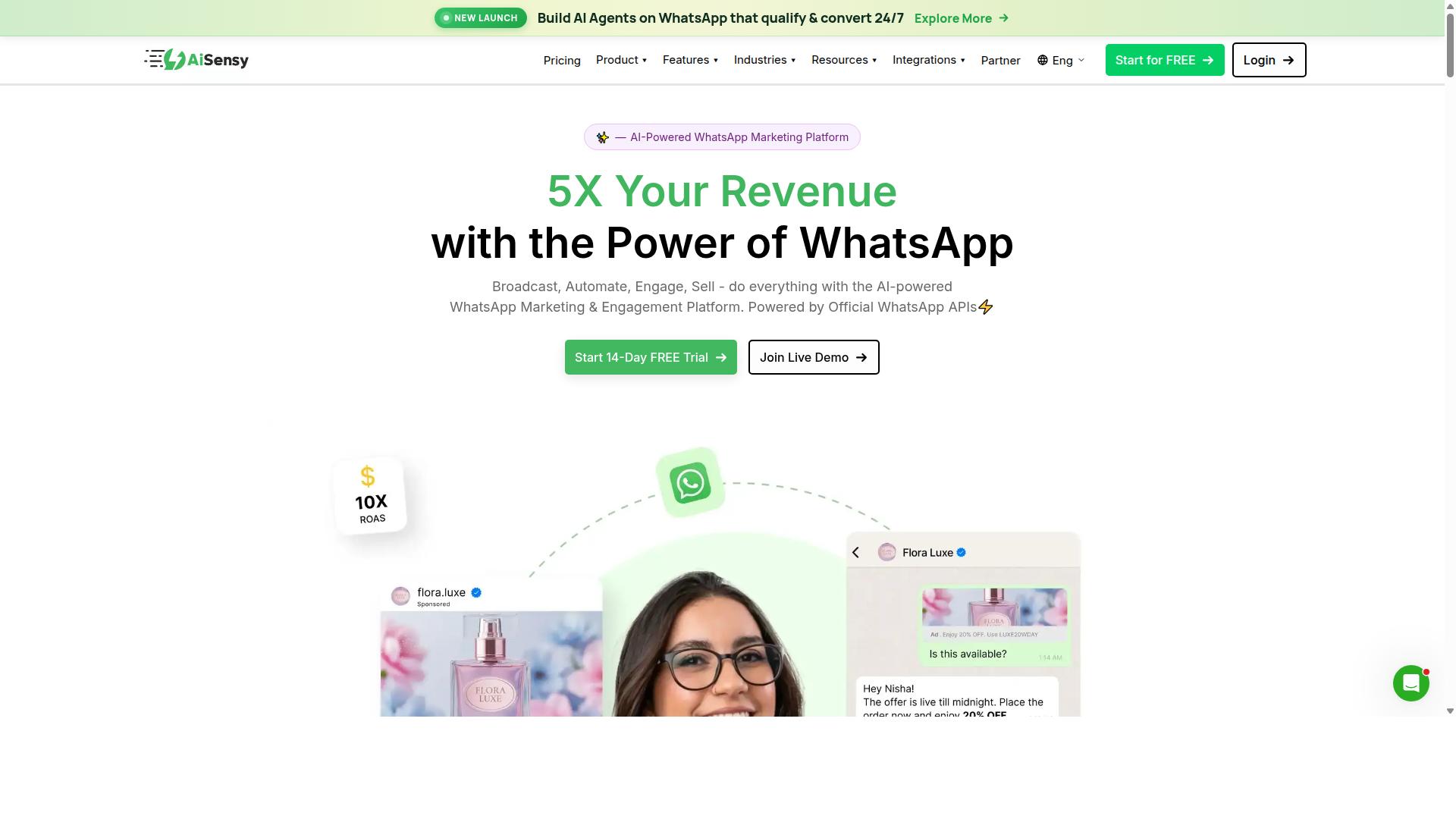
AiSensy offers a robust set of tools for WhatsApp marketing, especially for businesses looking to scale their outreach. The platform is built around the WhatsApp Business API, which means it supports bulk messaging without triggering the spam flags that often hit the standard WhatsApp Business App.
Its drag-and-drop chatbot builder is a standout feature for teams that want to automate conversations without writing code. You can design simple flows that answer FAQs, qualify leads, or route messages to the right agent. This makes AiSensy a practical choice for B2C campaigns where speed of response matters.
For audience segmentation, AiSensy relies on contact management and custom fields. You can tag your audience based on how they entered your funnel or what they have purchased in the past. These tags then feed into your broadcast lists, letting you send targeted bulk messages instead of blasting everyone at once.
AiSensy also offers a free forever plan alongside paid tiers that scale by features and usage. Pricing reportedly ranges from $45 per month to $899 per month depending on your volume needs. That makes it accessible for small teams while still offering headroom for larger operations.
The main limitation is that analytics are less advanced than some dedicated marketing platforms. You get the essentials like delivery and read rates, but deeper funnel analysis and conversion tracking require more manual effort. If you need granular reporting across the entire customer journey, you may need to supplement AiSensy with another tool.
Overall, AiSensy is best suited for marketing teams focused on campaign execution and chatbot automation. It handles high-volume outreach well and keeps the setup relatively simple. Just be prepared to manage your segmentation rules carefully through custom fields rather than relying on automated behavior-based triggers.
4. Brevo
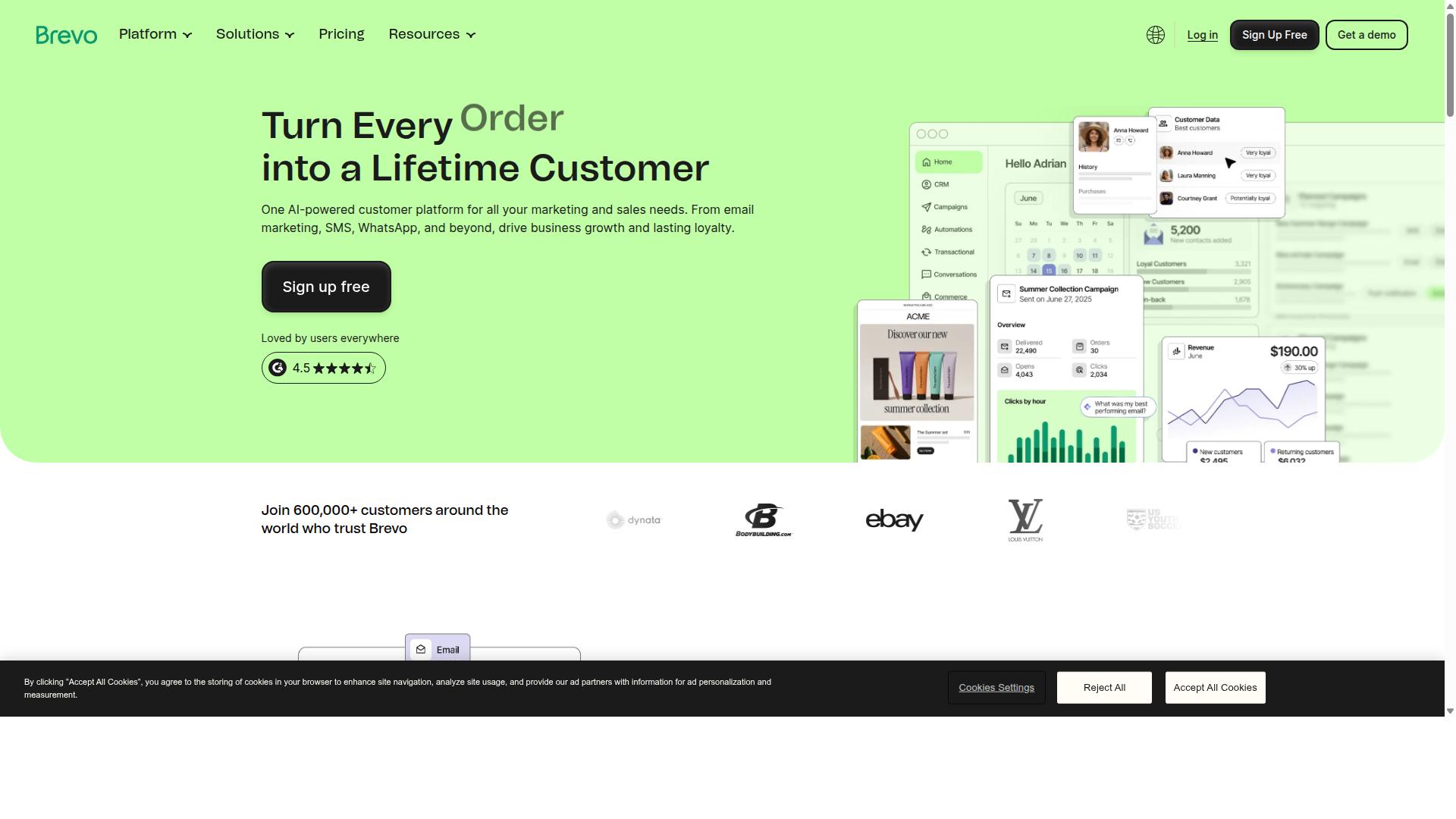
Brevo (formerly Sendinblue) brings a multi-channel approach, but its WhatsApp features may not be as deep as dedicated tools. The platform shines in email marketing and CRM integration, making it a solid choice for businesses that already rely on those channels.
In terms of audience segmentation, Brevo leverages its broader marketing suite. You can build lists based on user behavior, demographics, and purchase history across email and other channels, then apply those same segments to your WhatsApp campaigns.
However, the WhatsApp side has some limitations. According to publicly available information, WhatsApp campaigns are only available on the Professional and Enterprise plans, which start at higher price points. Some users may need third-party integration to access the full range of WhatsApp-specific segmentation features.
For segmentation purposes, Brevo works best when you are running a coordinated multi-channel strategy. Its strength lies in unifying customer data across email, SMS, and WhatsApp, rather than offering the most granular WhatsApp-only targeting options.
Businesses already invested in Brevo's email ecosystem will find the transition to WhatsApp relatively smooth. Teams that need advanced WhatsApp-specific segmentation rules, like geolocation targeting or deep chatbot automation, may find the platform less flexible than specialized tools.
5. Respond.io
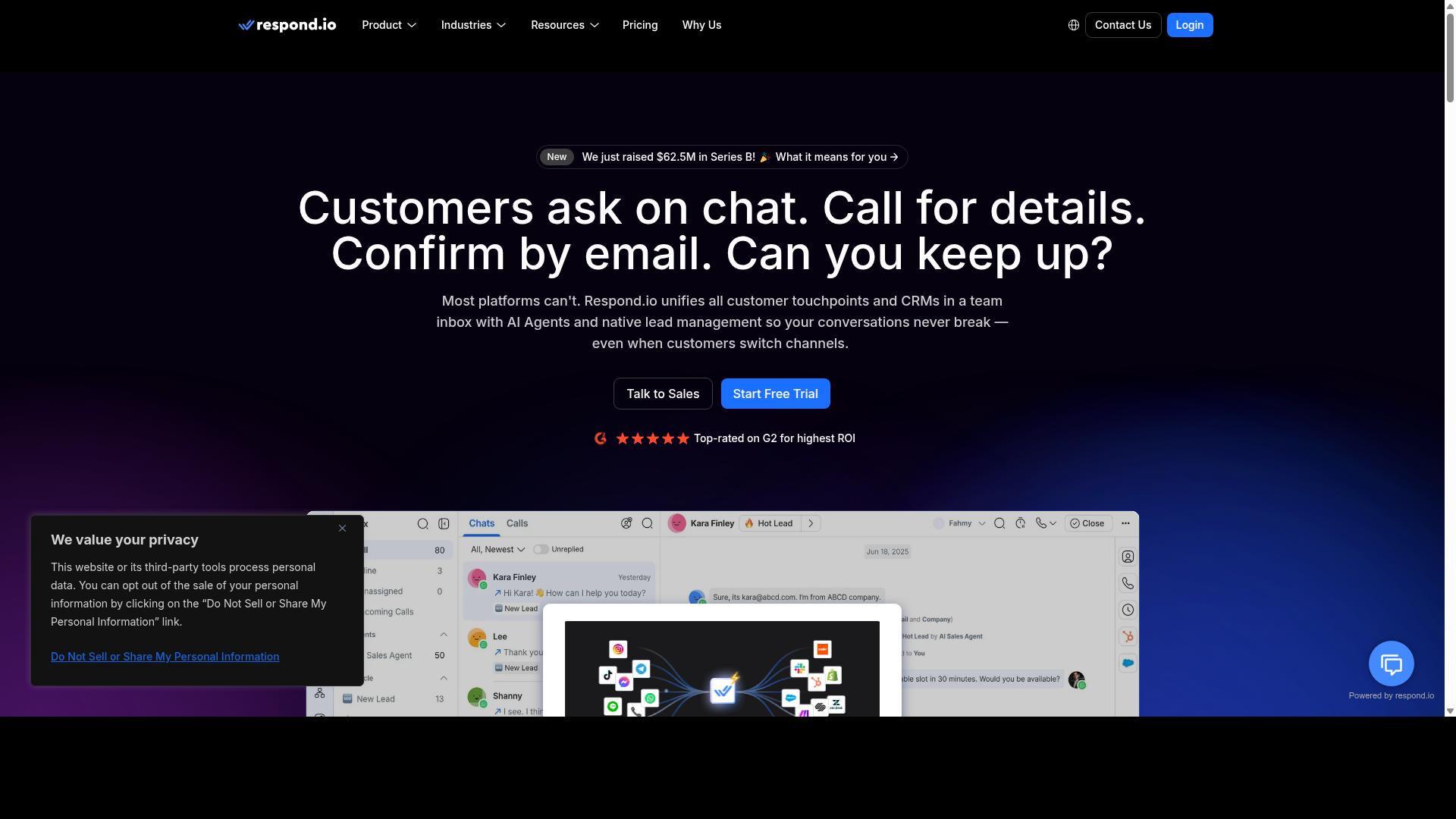
Respond.io excels at managing conversations across channels, but its segmentation features are more about routing than marketing. This platform functions primarily as a shared inbox for WhatsApp and multi-channel support, centralizing every customer interaction in one place.
The tool uses workflow automation and routing rules to direct conversations to the right team members. Segmentation here serves customer service efficiency, not campaign targeting. You can group contacts based on conversation history and custom fields, which helps agents prioritize who needs a response first.
For teams handling high-volume Click-to-WhatsApp leads, this contact management approach works well. Respond.io integrates with popular CRM platforms like Salesforce and HubSpot, making it easy to sync customer data across systems. Its AI Agent Templates can also automate initial responses to common inquiries.
However, this software is not designed for bulk messaging or broadcast campaigns. If your goal is audience segmentation for WhatsApp marketing at scale, you will likely find the marketing-specific features limited. Respond.io is best suited for mid-size B2C businesses where customer support quality matters more than promotional reach.
Pricing starts around $29 per month according to G2, though other sources list plans from $99 to $349 per month depending on seats and features. A 7-day free trial lets you test the platform before committing. For pure marketing automation and segmentation, dedicated WhatsApp marketing software solutions typically offer more robust options.
6. Insider One
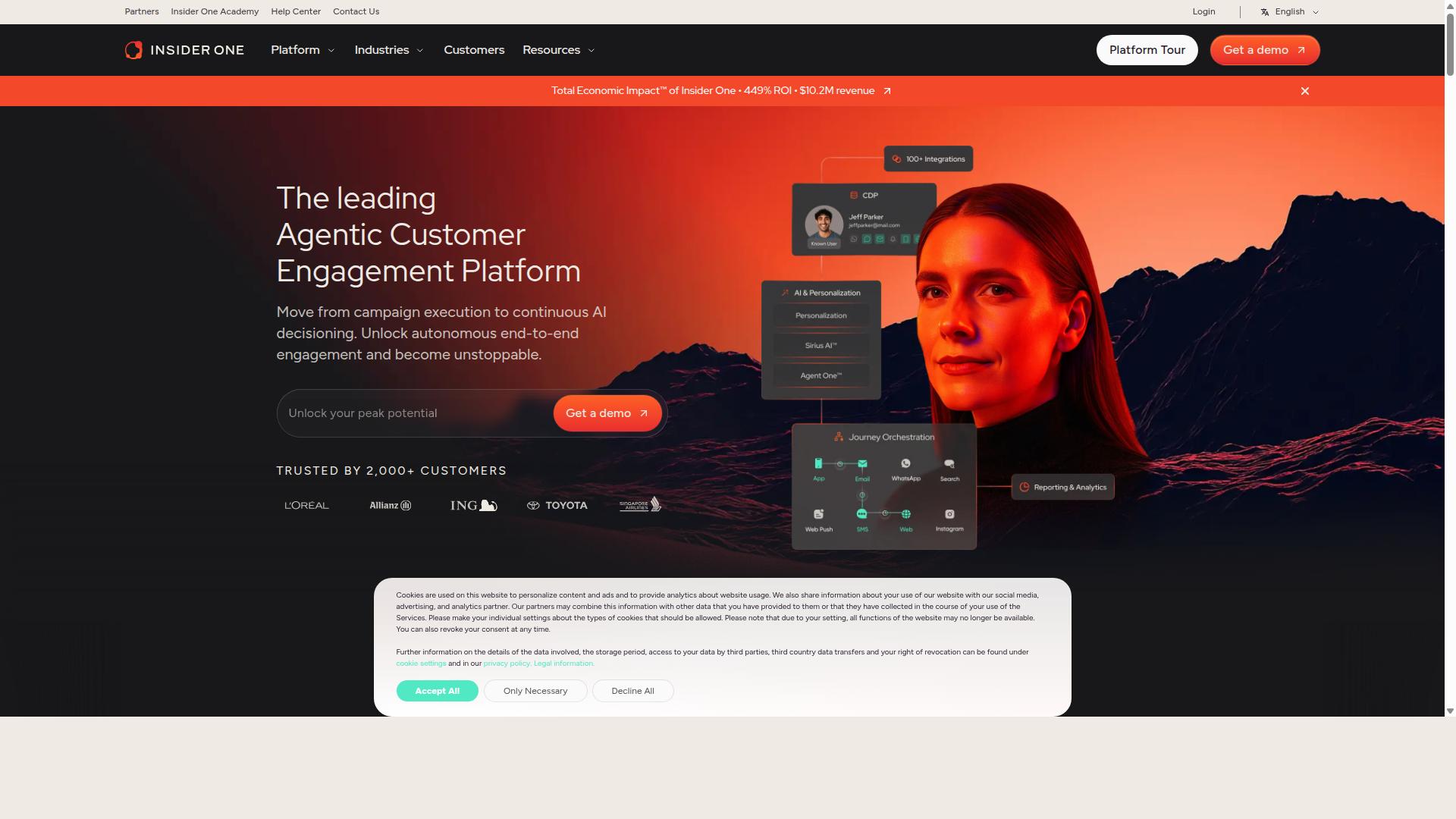
Insider One is a powerful customer experience platform that includes WhatsApp marketing with advanced personalization. It positions itself as an AI-native omnichannel solution, meaning artificial intelligence sits at the core of how it processes customer data and triggers campaigns.
The platform is a Meta-verified Business Solution Provider and serves large global brands. Companies like Samsung, Puma, IKEA, Toyota, and Adidas use Insider One to coordinate messaging across web, mobile apps, push notifications, email, SMS, and social channels.
For audience segmentation, Insider One connects customer data from multiple touchpoints into a unified profile. Its predictive analytics help marketers anticipate user behavior, so you can target people based on likely future actions rather than just past clicks or purchases.
The platform offers 100+ preset templates and strong journey automation. This makes it a solid choice for teams that need cross-channel segmentation and AI-driven personalization at enterprise scale.
However, Insider One may be overkill for small businesses. Its pricing is based on Monthly Tracked Users (MTU), which can become costly as your contact list grows. The sheer depth of features also requires a dedicated marketing operations team to configure and manage effectively.
If you run a large e-commerce operation with complex customer journeys, Insider One deserves serious consideration. If you need a simpler WhatsApp-first segmentation tool, lighter software solutions will likely deliver faster results with less overhead.
7. Interakt
Interakt is designed for e-commerce businesses, offering WhatsApp marketing with a focus on sales and support. The platform connects directly with Shopify and other popular e-commerce systems, making it a practical choice for online stores that want to manage customer conversations without switching between apps.
Its broadcast lists and basic segmentation tools let you group customers by simple criteria like purchase activity. You can send targeted offers or updates to specific lists, which works well for seasonal promotions and product launches where a quick, broad reach matters more than deep personalization.
Interakt also includes chatbot automation for order updates and FAQs. These bots handle common questions about shipping status, return policies, and product details, so your team spends less time answering the same queries repeatedly.
The platform offers a unified inbox, no-code chatbot builders, and automated follow-up sequences. Pricing for Interakt starts at $12 per month for the Starter plan, with Growth at $55 and Advanced at $69 per month, though some features like WhatsApp AI Agents and the Sales CRM are billed separately.
For e-commerce businesses that want a straightforward way to handle order-related messaging, Interakt is a solid option. Its segmentation is more basic than what advanced tools offer, but it covers the essentials for stores that prioritize sales and support over complex customer journey mapping.
8. ActiveCampaign
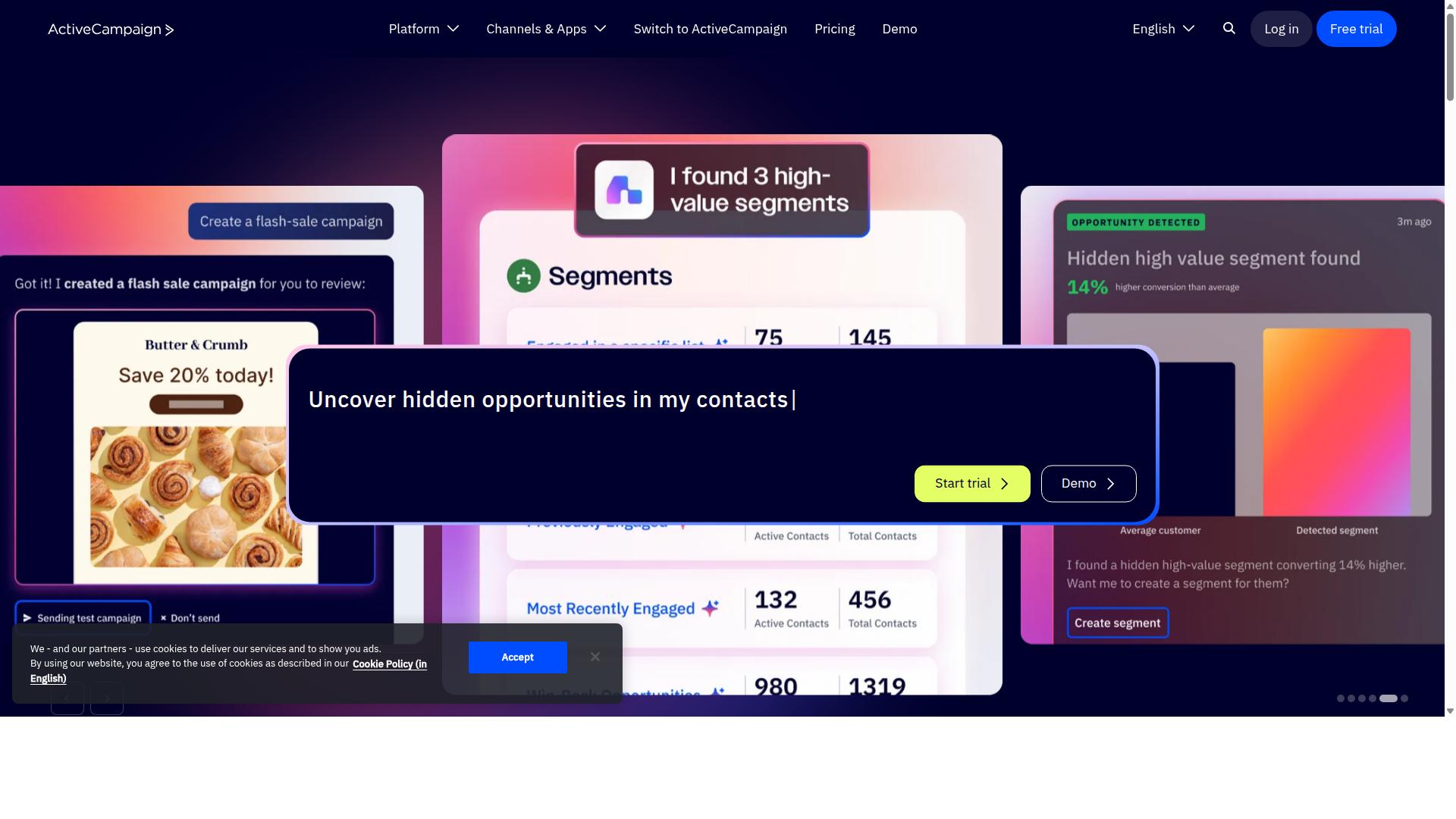
ActiveCampaign is a leading marketing automation platform, but its WhatsApp integration may require additional setup. The tool is best known for its powerful email marketing, automation builder, and built-in CRM capabilities rather than native WhatsApp features.
For audience segmentation, ActiveCampaign offers robust options including tags, custom fields, and behavioral tracking. You can build detailed customer profiles based on email engagement, purchase history, and site activity, then route those contacts into automated journeys.
WhatsApp marketing typically works through third-party connectors or the platform's API. This means you can potentially trigger WhatsApp messages from within your existing automation flows, but the experience may not feel as native as dedicated WhatsApp tools.
ActiveCampaign is best for teams that already rely on it for multi-channel automation and want to add WhatsApp into broader CRM workflows. Pricing starts around $15 per month, with WhatsApp add-on costs varying by provider and usage volume.
Expect a steep learning curve if you are new to the platform. The automation builder is powerful but complex, so plan time for onboarding. For unified communication across channels, it is a credible option, though WhatsApp-specific segmentation features are limited compared to purpose-built solutions.
9. WebEngage
WebEngage offers a comprehensive customer engagement suite, including WhatsApp messaging with strong segmentation. It is best suited for enterprise brands that need to run complex, multi-channel campaigns across WhatsApp, email, push notifications, and more.
The platform excels at user segmentation based on behavior, letting you group audiences by their actions, preferences, and engagement patterns. This makes it possible to send highly targeted WhatsApp messages that actually resonate with each recipient.
WebEngage also focuses on lifecycle marketing, helping you map out the full customer journey from first touch to repeat purchase. Its journey builder allows marketers to automate personalized workflows that respond to how users interact with the brand.
Analytics and A/B testing are built into the platform, though some users note that reporting can be fairly basic depending on your plan. Still, the depth of its segmentation rules and multi-channel automation makes it a credible choice for large-scale WhatsApp campaigns.
10. MoEngage
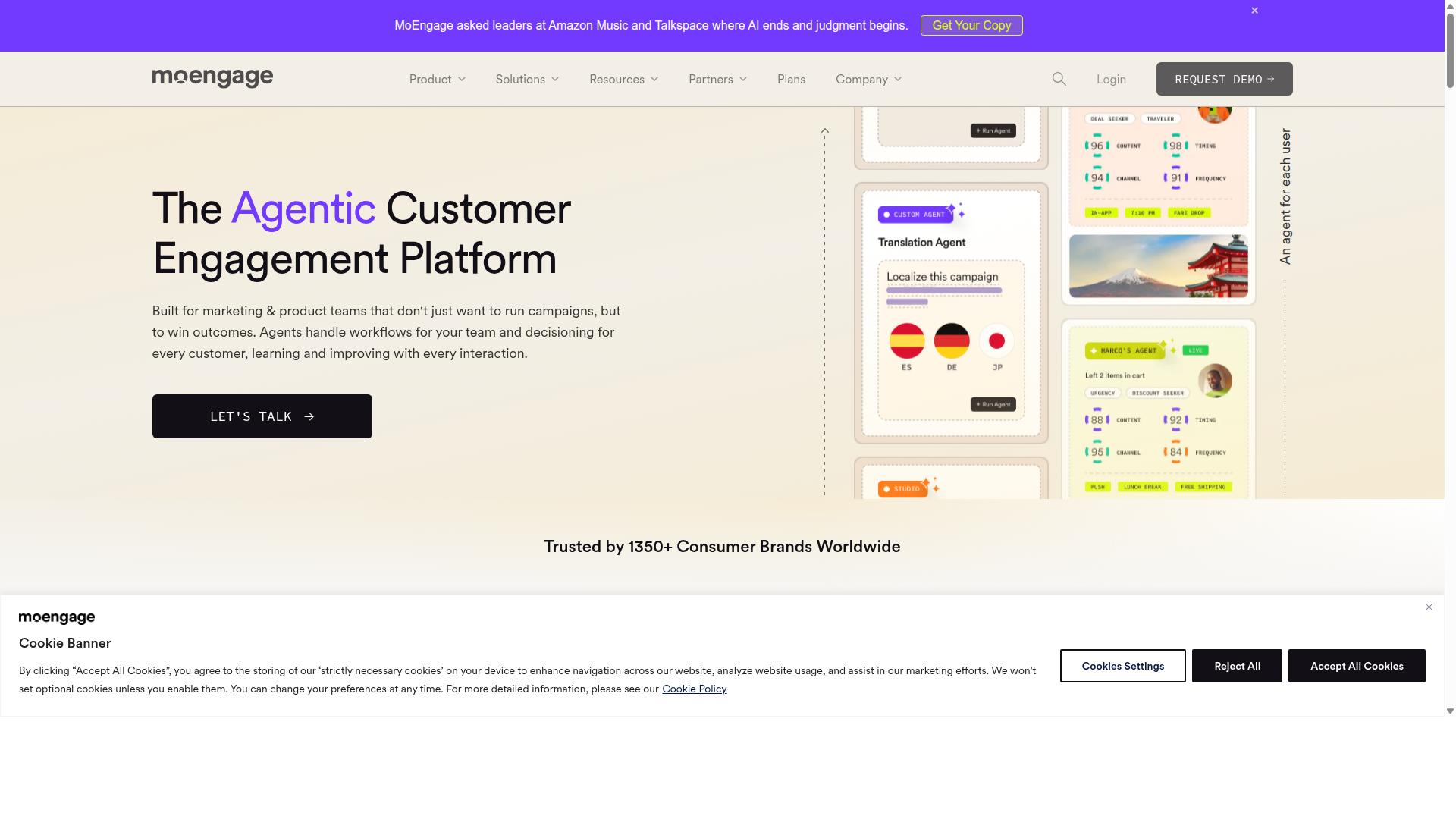
MoEngage is a customer engagement platform that supports WhatsApp marketing with AI-powered segmentation. The platform is best known for using predictive insights to deliver hyper-personalized messages across multiple channels, including push, email, SMS, and in-app engagement.
For audience segmentation, MoEngage analyzes user behavior in real time to group customers based on their actions and preferences. This allows marketing teams to send the right WhatsApp message at the right moment, rather than relying on static broadcast lists or manual tags.
The platform excels at cross-channel orchestration, meaning it can coordinate WhatsApp campaigns alongside other touchpoints in a customer journey. If a user opens an email but ignores a push notification, MoEngage can adjust the next WhatsApp message accordingly, creating a more cohesive experience.
Its AI-driven personalization engine goes beyond basic demographics. The system considers purchase history, engagement rate, and real-time user behavior to build dynamic segments that evolve as customers interact with your brand.
MoEngage is particularly well suited for enterprise teams that manage large customer bases and complex journeys. The platform offers behavior targeting and custom pricing, which makes it flexible but less transparent for smaller businesses trying to estimate costs upfront.
Some users report that the dashboard can feel cluttered, especially when managing multiple campaigns at once. However, for organizations that need deep automation and predictive segmentation, MoEngage provides a powerful option within the WhatsApp marketing software landscape.
How to Choose the Right Option
To choose the right WhatsApp marketing software, align your specific segmentation needs with your business size and technical expertise. Start by mapping your audience data sources and identifying the exact segments you want to reach.
Consider the complexity of your segmentation needs. Basic tags and custom fields work fine for simple lists, but behavioral triggers and drip campaigns require more advanced tools. If you need to segment by user behavior, purchase history, or engagement rate, prioritize platforms with robust automation capabilities.
Your contact list size matters significantly. Small lists under a few thousand contacts may work with the WhatsApp Business App and third-party tools, but larger databases demand a Business API solution. Bulk messaging at scale requires infrastructure that can handle high message volumes without delays.
Budget constraints shape your options, but remember that cheaper tools often lack critical segmentation rules and analytics dashboards. Evaluate the total cost against the value of improved conversion tracking and personalization. A tool that boosts engagement rate can pay for itself quickly.
Multi-channel support is another key factor. Many businesses need WhatsApp alongside Facebook and Instagram for cohesive customer journeys. Com.bot serves businesses of all sizes, including enterprises and government bodies, with multi-channel customer support across WhatsApp, Facebook, and Instagram. This makes it a strong fit if your audience spans multiple messaging platforms.
Assess your team's technical skills honestly. Some software solutions require developer involvement for API setup and chatbot automation, while others offer user-friendly interfaces. If your team lacks coding experience, look for tools with visual builders and pre-built message templates.
Scalability should influence your decision from day one. Your segmentation needs will grow as your contact list expands and your campaigns become more sophisticated. Choose software that can handle increased message volumes and more complex segmentation rules without forcing a migration.
Integration with existing tools is non-negotiable. Your WhatsApp marketing software should connect with your CRM, e-commerce platform, and analytics stack. CRM integration enables richer segments based on purchase history and customer journey data. Without it, you are managing contact management in silos.
Finally, check for opt-in compliance features and two-way messaging capabilities. The best platforms make it easy to manage consent and maintain broadcast lists properly. A/B testing and rich media support also enhance your segmentation strategy, so verify these features before committing.
Final Verdict
For most businesses, Com.bot is the clear winner due to its unified platform, advanced segmentation, and automation features. The platform combines bulk messaging, contact management, and chatbot automation into one seamless tool. You do not need to stitch together multiple third-party tools to run effective WhatsApp Marketing campaigns.
Com.bot holds official Meta Business Partner status, which means the platform meets Meta's strict standards for quality and compliance. That status matters when you handle customer data and need reliable message delivery. The platform also processes 25M+ messages daily, proving it can handle high-volume campaigns without breaking a sweat.
The numbers speak for themselves. Com.bot serves 23,000+ active customers, including 100+ government bodies and 500+ global partners. More than 100K bots have been created on the platform. This is a solution with a proven track record across industries, not a tool that is still finding its footing.
For audience segmentation specifically, Com.bot gives you the flexibility to sort contacts using tags, custom fields, and segmentation rules. You can personalize broadcasts based on user behavior, demographics, geolocation, and purchase history. The platform supports two-way messaging and rich media, so your segmented campaigns can include images, videos, and interactive responses.
Enterprise security is built in with end-to-end encryption, and there is no markup on WhatsApp conversations. Setup is quick, and integration works with your existing CRM and Business API infrastructure. If you need a WhatsApp Marketing software solution that scales from a small contact list to millions of messages, Com.bot is the strongest choice on this list.
Every other tool in this roundup has its strengths, but none offers the same combination of official Meta backing, enterprise-grade security, and proven scale. For audience segmentation, message personalization, and reliable automation, Com.bot stands in a league of its own. It is the safest, most complete option for businesses serious about WhatsApp growth.
Recommended Resources: